Inside officialdom
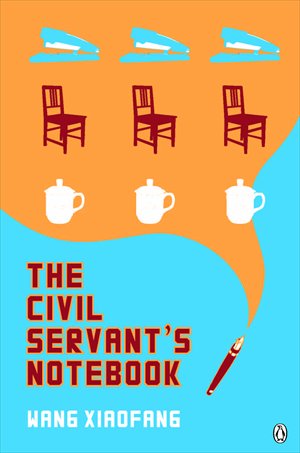
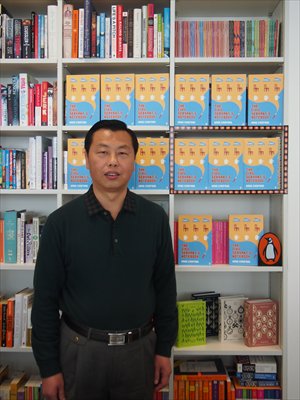
Corruption and the murky officialdom it infests in China is never far from the headlines, but it's a world that, for the most part, remains shrouded in mystery. The Civil Servant's Notebook (2009) written by bestselling author Wang Xiaofang is an insider's account into a fictional version of this world. The novel's English edition was released last month by publishing house Penguin, providing insight into the inner workings and skullduggery of grass-roots politics in China.
To win favor with his influential boss and advance his political career, lowly civil servant Yang Hengda from the fictional Dongzhou municipal government has to drink urine for five years to test his superior's "remedy."
As two vice-mayors eye the municipality's top job, a personal notebook of one candidate appears in the hand of higher officials. A manhunt ensues for the anonymous sender, exposing further plots that range from corruption to subterfuge, bribery to sex.
Drawing on his own experience as former secretary to Ma Xiangdong, a deputy mayor of Shenyang, Liaoning Province, who was executed in 2001 for embezzling more than $3.6 million in public funds, Wang reflects on centuries-old bureaucracy with references to Chinese and Western philosophers.
"For over a decade, the nature of Chinese bureaucracy has been besetting me. After the publication of my previous 11 officialdom novels, I began to have more serious thoughts that inspired to write this book," Wang, 49, told Metro Beijing.
The book's Chinese edition sold 100,000 copies upon its release three years ago, following in the success of the author's Director of the Beijing Reception Office (2007), which sold 3 million copies. Wang's formula for bestselling success has been capitalizing on Chinese readers' insatiable curiosity of the country's often mysterious official system.
"The real nature of Chinese bureaucracy is that subordinates must be obedient to their superiors, which has resulted in harm to human beings," he said. "They have become spiritual eunuchs under the system."
Although Wang was cleared of any wrongdoing following Ma's downfall, he was subjected to a thorough investigation and suspicion from friends.
His political ambitions soon dissolved, turning him to a career in writing.
"My former self as a civil servant is dead. As an author, my only belief is in literature," stressed Wang, reluctant in his interview with Metro Beijing to dwell too much on the dark side of officialdom.
The Civil Servant's Notebook adopts a first-person narrative involving about 40 characters. Even office stationary, such as a pen and stapler, share their two cents with the reader throughout the story.
While offering different voices to the story adds an interesting dimension, the excessive cast of characters complicates the story at times.
"It is inevitable for officialdom writers to be harassed," Wang offered, when asked if his writing had landed him in trouble with authorities. "But real writers should raise their concerns and have the courage to voice their opinions."
Currently working on three new officialdom novels, Wang is hardly an optimist when it comes to the country's anti-corruption campaign spearheaded by the Party.
"Bureaucracy has such a long history in China and is so deeply rooted. It has become a way of life for the Chinese people and it is so difficult to rid of it completely," he sighed.