Chinese special envoy conducts shuttle diplomacy again on Cambodia-Thailand border clashes
By Published: Dec 23, 2025 03:59 PM


From December 18 to 23, 2025, Deng Xijun, the Chinese Foreign Ministry's Special Envoy for Asian Affairs visited Cambodia and Thailand and engaged in shuttle diplomacy over the recent border clashes between the two countries. Photo: Chinese Foreign Ministry
From December 18 to 23, Deng Xijun, the Chinese Foreign Ministry's Special Envoy for Asian Affairs visited Cambodia and Thailand and engaged in shuttle diplomacy over the recent border clashes between the two countries, the Chinese Foreign Ministry said in a release on Tuesday.
This marks the second time Deng has conducted shuttle diplomacy between the two countries, following his previous visits from September 12 to 13 this year.
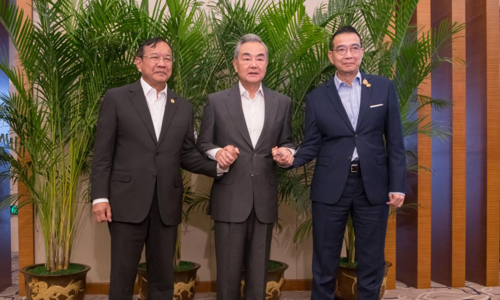
In Cambodia, he met with Prime Minister Hun Manet, Deputy Prime Minister and Foreign Minister Prak Sokhonn, Deputy Prime Minister and Minister of National Defense Tea Seiha, and Royal Cambodian Army Commander Mao Sophan, the ministry said.
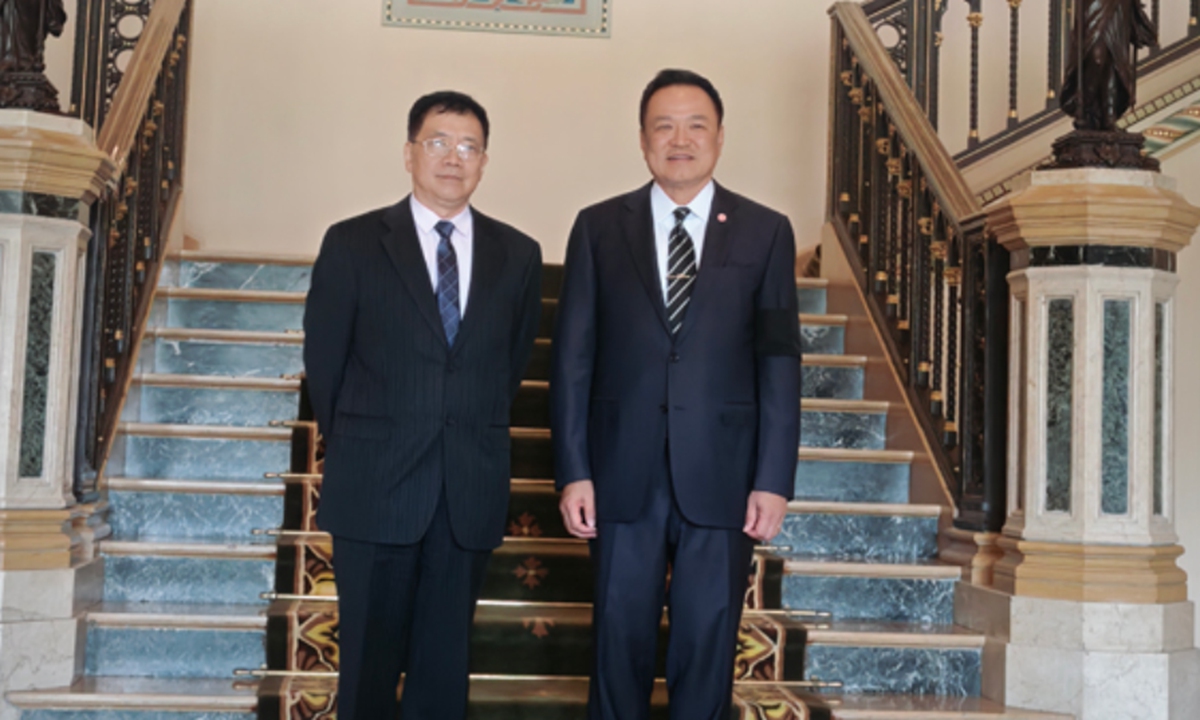
From December 18 to 23, 2025, Deng Xijun, the Chinese Foreign Ministry's Special Envoy for Asian Affairs visited Cambodia and Thailand and engaged in shuttle diplomacy over the recent border clashes between the two countries. Photo: Chinese Foreign Ministry
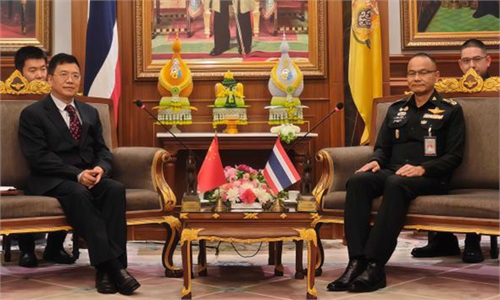
In Thailand, the Chinese envoy met with Thai Prime Minister Anutin Charnvirakul, Defense Minister Nattaphon Narkphanit, Supreme Commander Ukrit Boontanon, and Eksiri Pintaruchi, Permanent Secretary for Foreign Affairs of Thailand.China is highly concerned about the current situation along the Cambodia-Thailand border, and is deeply saddened by the casualties and displacement caused by the conflict, over which it extends its sincere sympathies, Deng said, according to the release from the Chinese Foreign Ministry.
The most urgent priority is to achieve an immediate ceasefire, halt the fighting and resume dialogue to resolve the border dispute through peaceful means, he said.
China supports ASEAN's mediation efforts and supports the important role of the ASEAN observer mission in monitoring a ceasefire. China stands ready once again to help create conditions and provide a platform for dialogue and negotiations between the two sides. China hopes that Cambodia and Thailand will move toward each other, work to restore mutual trust, and rebuild peace along the border, Deng noted.
Both Cambodia and Thailand have expressed appreciation for China's continued efforts to promote peace and talks in a manner acceptable to all parties, according to the Chinese Foreign Ministry.
They reaffirmed their commitment to peace, expressed hope for achieving a sustainable ceasefire, and said they are willing to maintain close communication with China to help de-escalate tensions and restore peace and stability in Cambodia-Thailand border areas at an early date, the ministry said.
Dozens have been killed in the Cambodia-Thailand border clashes, including soldiers and civilians in both countries, official data showed on Monday, the Xinhua News Agency reported.
Following the Special ASEAN Foreign Ministers' Meeting in Kuala Lumpur, Malaysia on Monday, Cambodian and Thai officials will meet on Wednesday to negotiate the potential return to a ceasefire, according to media reports.
The talks will be held via the General Border Committee (GBC), an existing bilateral mechanism co-chaired by the two countries' defense ministers that is used to manage security matters on their shared border, according to the Strait Times.
Speaking at a press conference on Tuesday following the Special ASEAN Foreign Ministers' Meeting, Thai Foreign Ministry spokesperson Nikorndej Balankura revealed that Thailand has set strict conditions for deescalation after months of deteriorating relations and renewed border skirmishes, Thai media The Nation reported.
The briefing also touched upon the roles of regional and global powers. Thailand expressed appreciation for China's stance of non-interference and neutrality, following a meeting between the Chinese Ambassador and the Thai prime minister, according to the Thai media report.
Bao Zhipeng, a Chinese scholar on Southeast Asian studies at the Chinese Academy of Social Sciences, told Global Times on Tuesday that avoiding a full-scale war is a fundamental bottom line for both countries, and neither side has sufficient reason to cross that line.
However, Bao noted that judging from the current situation, this new round of Thai-Cambodian tensions may continue for some time. When and if a window of opportunity emerges for the two countries to launch negotiations and signal a willingness for peace will largely depend on the cost of military operations and the evolution of domestic political dynamics in both countries, Bao said.
RELATED ARTICLES