Editor's Note:
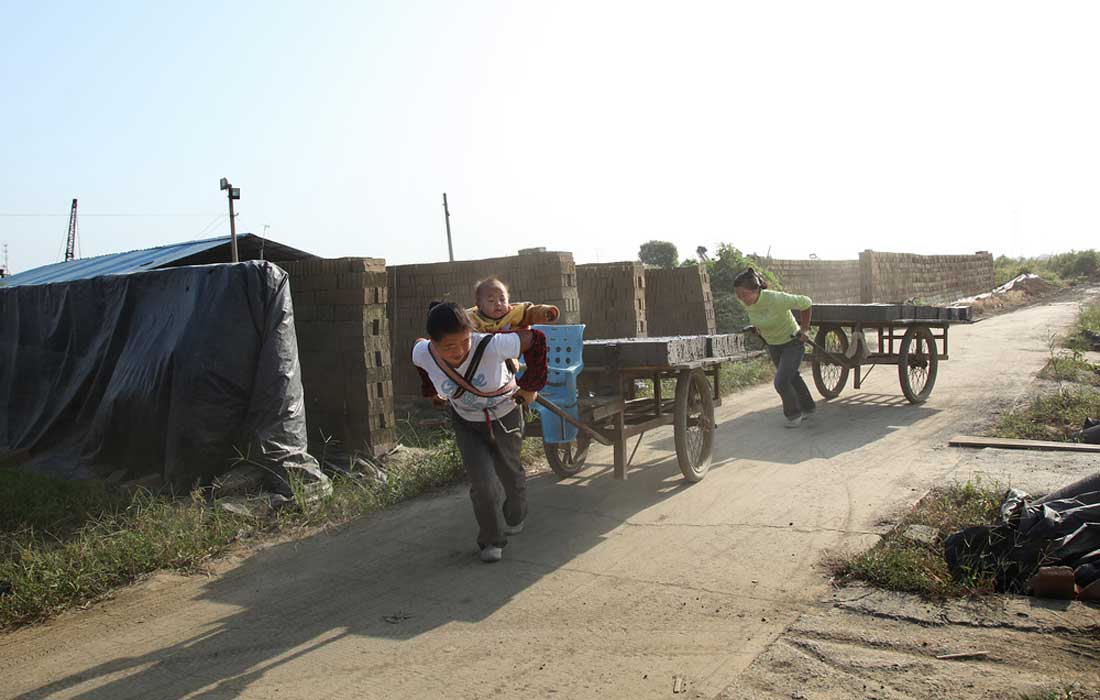
Since the 1990s, dozens of families had traveled thousands of kilometers from home to work at a massive brick factory on the outskirts of Suzhou, Jiangsu Province.
Before the 50,000 square-meter facility was shut down in December 2012, photographer Ji Hexiang visited more than 50 times over the course of 18 months to capture the lives of those families.(Pseudonyms have been used to protect the identity of those photographed.)
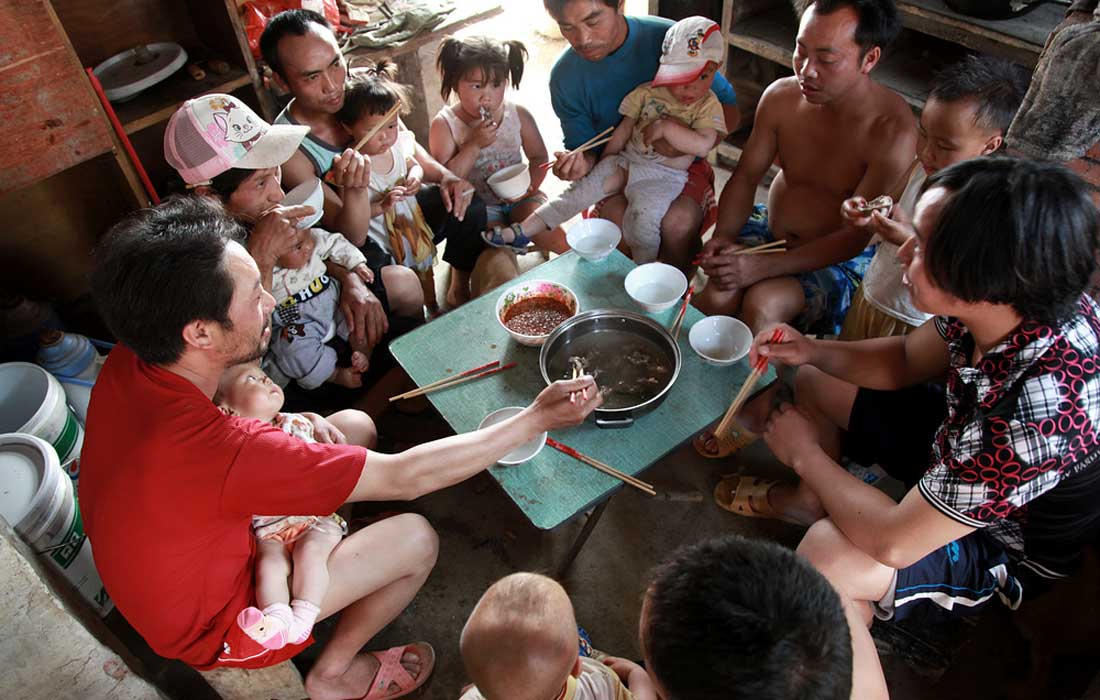 Laborers from Guizhou Province sit together and enjoy a simple meal with their children.
 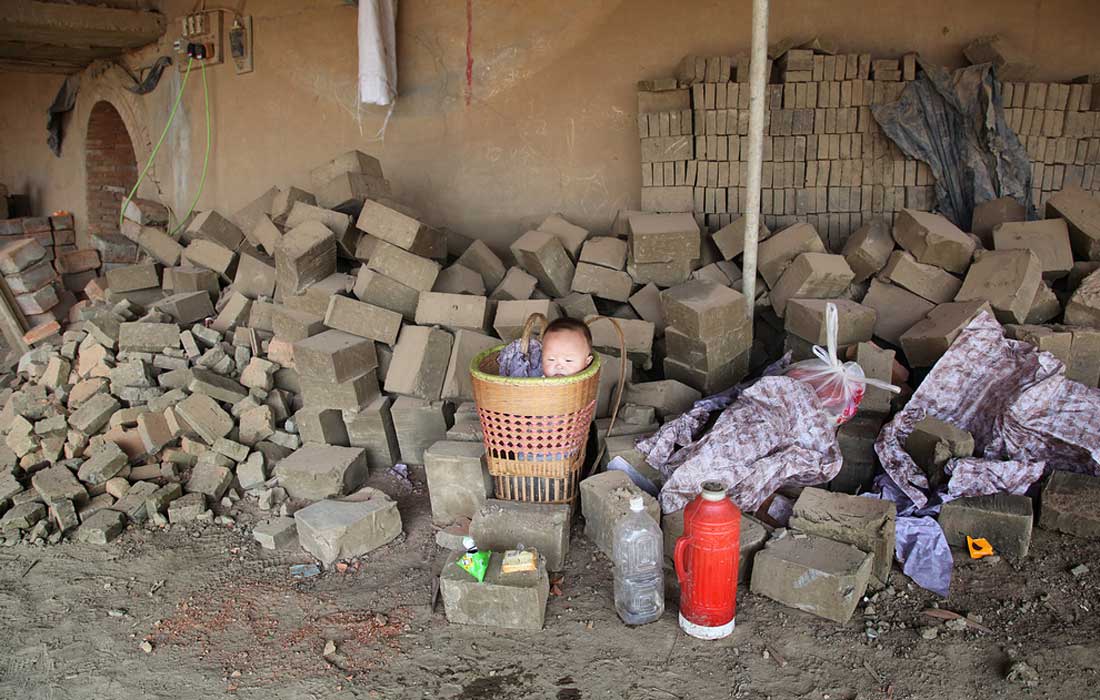 Zhu Jie, born in February, 2011, waits in her mother’s basket for her parents to return from work.
Father Zhu Shang, born in 1985, and mother Li Xiaochen, born in 1990, have traveled from their native Hebei Province to work at the factory. Most young mothers at the factory bring their children to work, while some carry their child on their back or place them in baskets or on carts.
Zhu Jie, born in February, 2011, waits in her mother’s basket for her parents to return from work.
Father Zhu Shang, born in 1985, and mother Li Xiaochen, born in 1990, have traveled from their native Hebei Province to work at the factory. Most young mothers at the factory bring their children to work, while some carry their child on their back or place them in baskets or on carts.
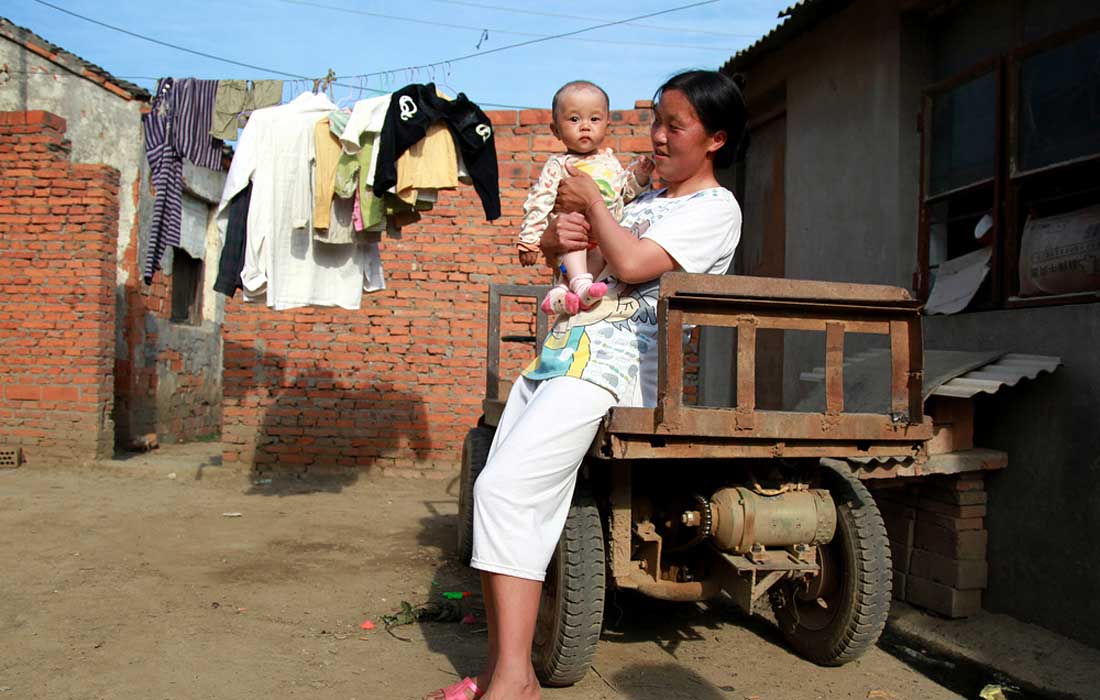 Yu Xiaoqiang, born in February 2011, is held by his mother. Yu Xiaoqiang, born in February 2011, is held by his mother.
The infant died of an imperforate anus, a congenital condition in which the rectal opening is either missing or blocked.
His parents, Yu Zhaoming and Li Ju, had already lost their 11-year-old daughter, who drowned after falling into a river in the summer of 2010.
Despite spending 20,000 yuan ($3,200) on treatment, Xiaoqiang died on the way to the hospital; a result of his parents’ lack of understanding of the disease and a six-day delay for treatment.
Yu Xiaoqiang, born in February 2011, is held by his mother. Yu Xiaoqiang, born in February 2011, is held by his mother.
The infant died of an imperforate anus, a congenital condition in which the rectal opening is either missing or blocked.
His parents, Yu Zhaoming and Li Ju, had already lost their 11-year-old daughter, who drowned after falling into a river in the summer of 2010.
Despite spending 20,000 yuan ($3,200) on treatment, Xiaoqiang died on the way to the hospital; a result of his parents’ lack of understanding of the disease and a six-day delay for treatment.  Ma Liya, born in 2007, enjoys watching TV on a bed at home. Because of the high cost of kindergarten, her parents were unable to provide her with a preschool education. She spends her time with her younger brother at home.
Most children living at the kiln attend a school for the children of migrant workers in town. The majority of them can not afford to attend kindergarten. Many go without new clothing, toys, quality food or, due to the long working hours, ample care from their parents.
Ma Liya, born in 2007, enjoys watching TV on a bed at home. Because of the high cost of kindergarten, her parents were unable to provide her with a preschool education. She spends her time with her younger brother at home.
Most children living at the kiln attend a school for the children of migrant workers in town. The majority of them can not afford to attend kindergarten. Many go without new clothing, toys, quality food or, due to the long working hours, ample care from their parents.
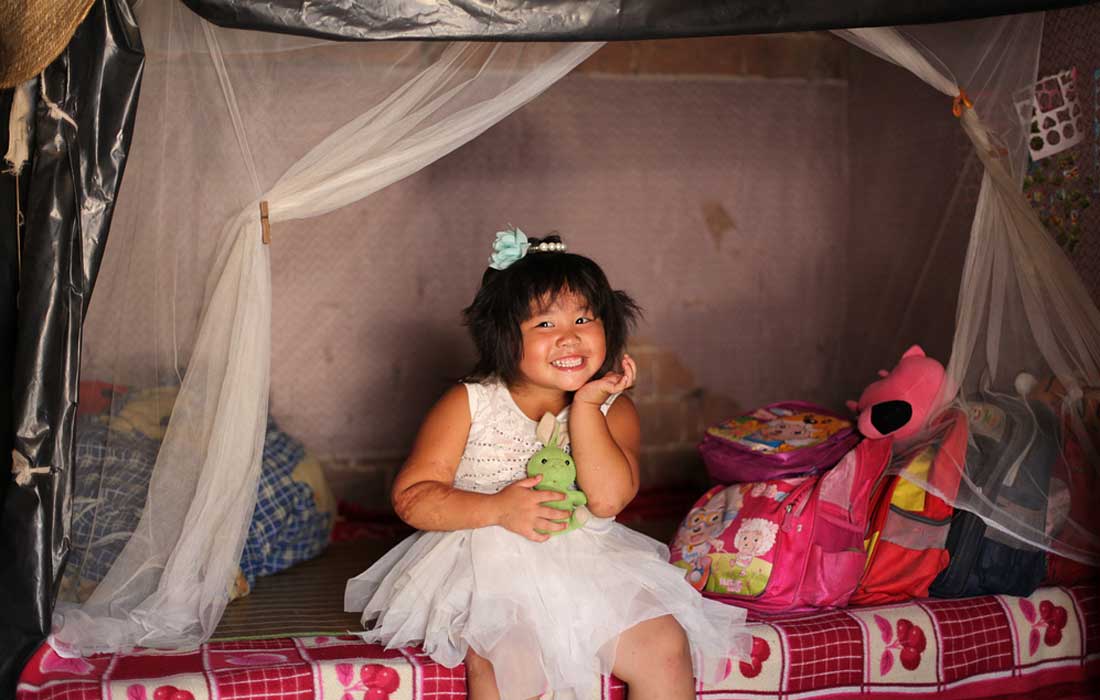 “Ma Liya, a nice name. She was so pleased when I showed her the developed photos I took of her. The first time we met, she was in dirty clothes, just like a wild child,” photographer Ji Hexiang wrote.
 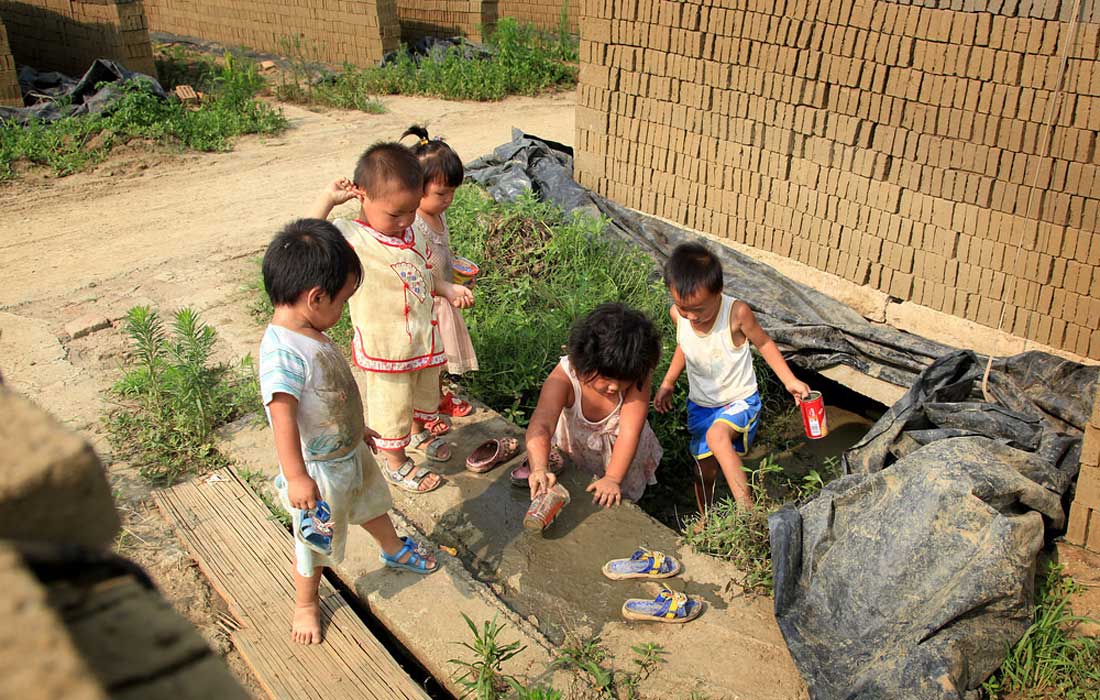 Ma Liya and her friends catch crayfish together.
“Although these boys and girls have moved from their hometowns, they never feel that they’re suffering through a rough time. For a child, the happiest thing is to spend time with their parents and friends together, enjoying family and friendship. They are much luckier than left-behind children,” Ji wrote.
Left-behind children refer to those whose migrant worker parents leave them to stay with friends or relatives while the parents seek work in cities far from home.
Ma Liya and her friends catch crayfish together.
“Although these boys and girls have moved from their hometowns, they never feel that they’re suffering through a rough time. For a child, the happiest thing is to spend time with their parents and friends together, enjoying family and friendship. They are much luckier than left-behind children,” Ji wrote.
Left-behind children refer to those whose migrant worker parents leave them to stay with friends or relatives while the parents seek work in cities far from home.
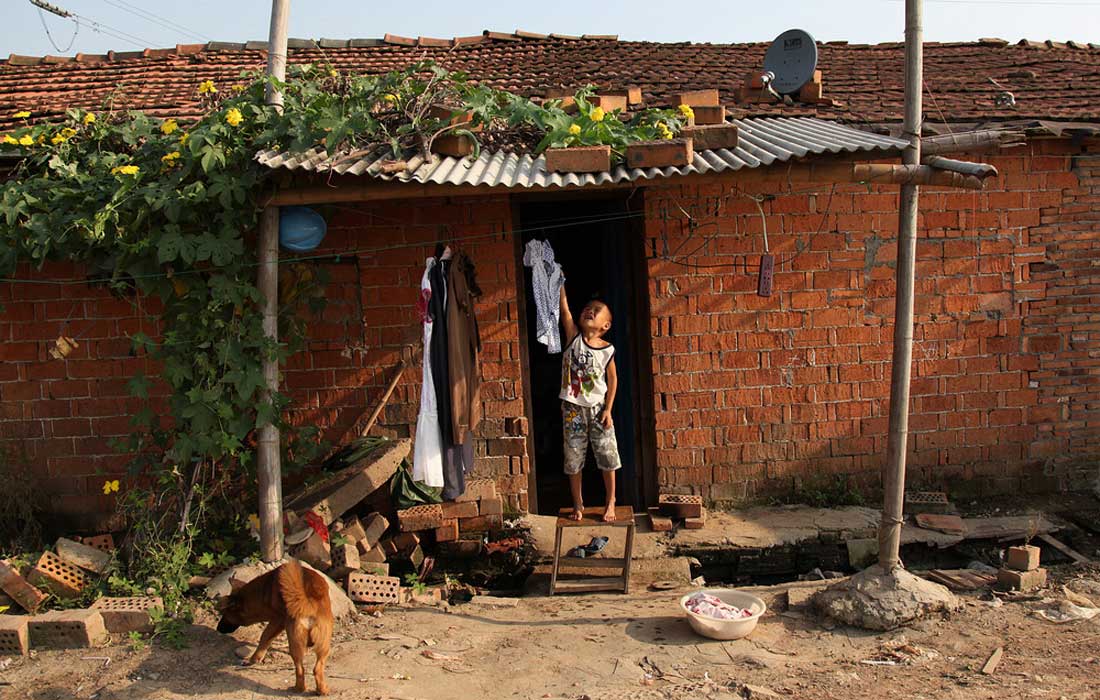 Zhuang Jun, born in March 2004, hangs laundry out to dry. His parents work a 12-hour shift at the kiln, from midnight to noon.
 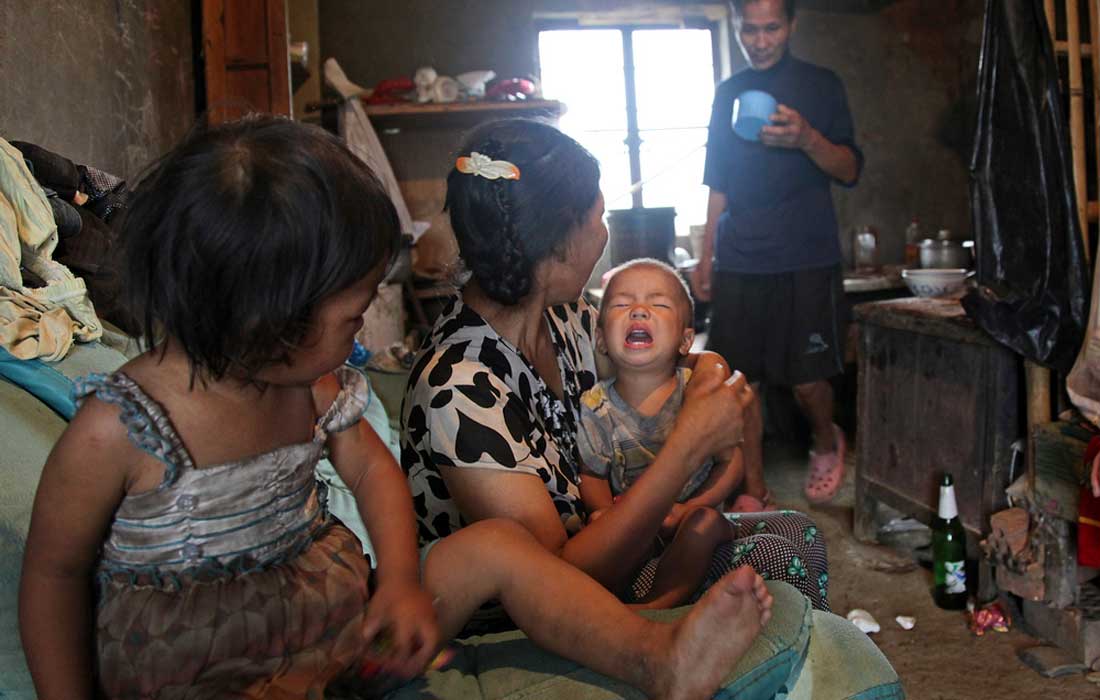 Ni Xiaobo, born in November 2009, cries because his grandmother refused to buy ice cream for him.
Ni’s mother ran away from home in May 2011. She was six-months pregnant at the time. Since her disappearance, Ni often cries and screams.
Ni Xiaobo, born in November 2009, cries because his grandmother refused to buy ice cream for him.
Ni’s mother ran away from home in May 2011. She was six-months pregnant at the time. Since her disappearance, Ni often cries and screams. 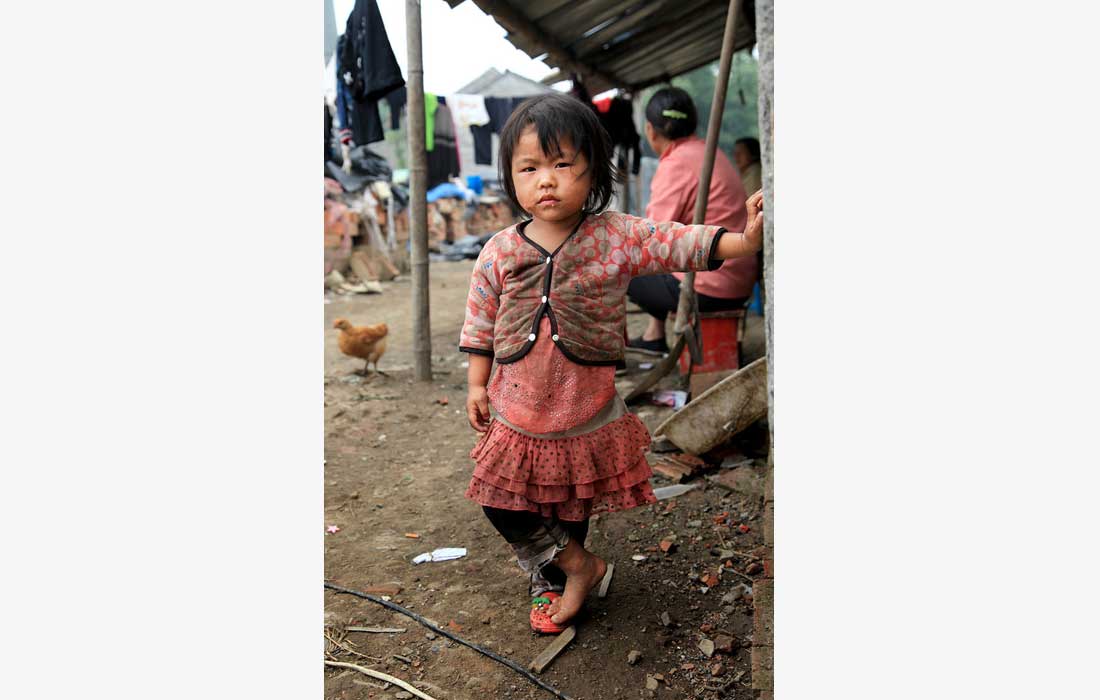 Pictured is Ni Xiaobo’s older sister, Xiaolian, born in February 2008.
“She is always in a daze at home, hoping that her mother can come back one day. She remembers her parents always having petty arguments,” Ji wrote.
Pictured is Ni Xiaobo’s older sister, Xiaolian, born in February 2008.
“She is always in a daze at home, hoping that her mother can come back one day. She remembers her parents always having petty arguments,” Ji wrote.
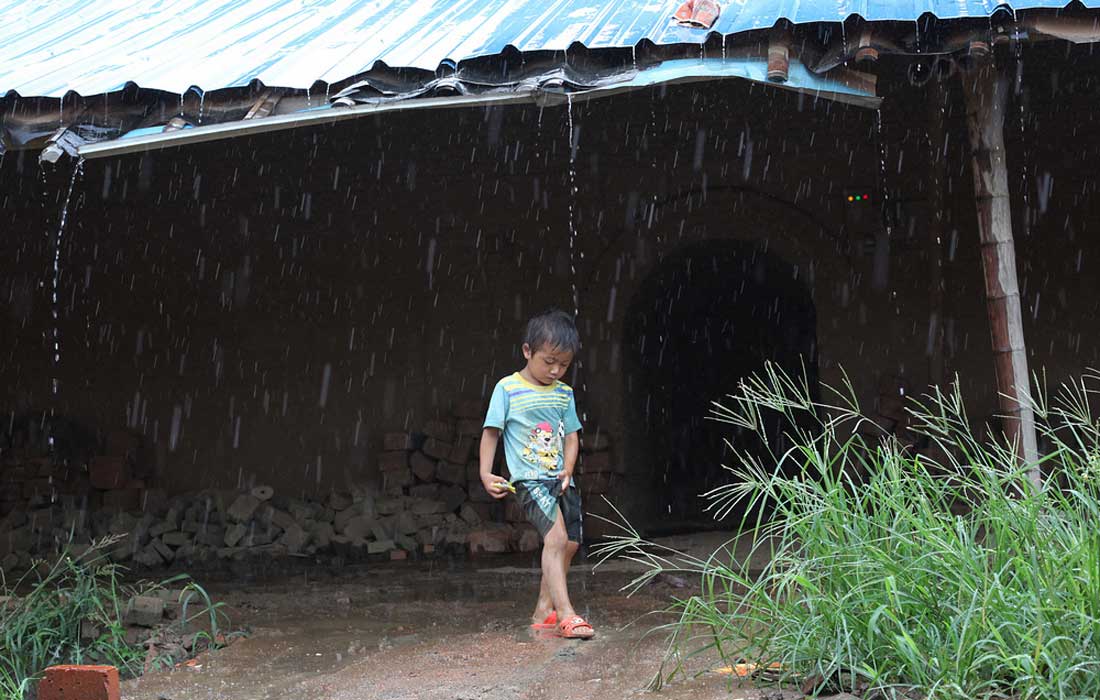 Xiang Xiaojie, born in June 2005 from Sichuan Province, plays with rainwater under a shed. He often accompanies his parents to work at the factory.
 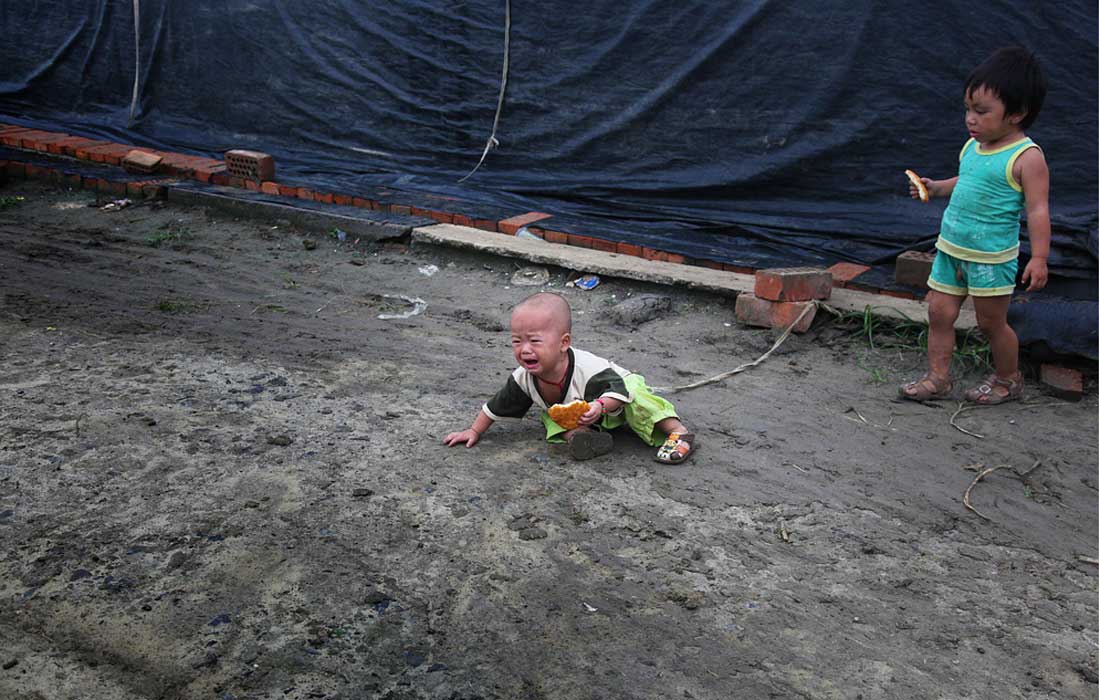 Zhang Hailiang, born in February 2010, cries while left tethered to a brick.
Father Zhang Yi’nan (born in 1983) began suffering from mental illness when Hailiang was six months old. He has since returned to their native Guizhou Province for treatment, leaving his son and wife, Wang Xiaozhu (born in 1990), at the kiln.
Wang both works and takes care of their child, leaving her both physically and mentally drained at the end of the day.
Zhang Hailiang, born in February 2010, cries while left tethered to a brick.
Father Zhang Yi’nan (born in 1983) began suffering from mental illness when Hailiang was six months old. He has since returned to their native Guizhou Province for treatment, leaving his son and wife, Wang Xiaozhu (born in 1990), at the kiln.
Wang both works and takes care of their child, leaving her both physically and mentally drained at the end of the day.