‘Romance of the three civilizations’ refined in shared future
In his latest book, Syed Hasan Javed, a veteran Pakistani diplomat, shares his own version of China story, how the country rose and revived through reform and opening-up in the past four decades, while answering the question why the shared future is relevant to all three main civilizations. He offers a new point of view for the readers, scholars, students and the general public about the China proposed Belt and Road Initiative.
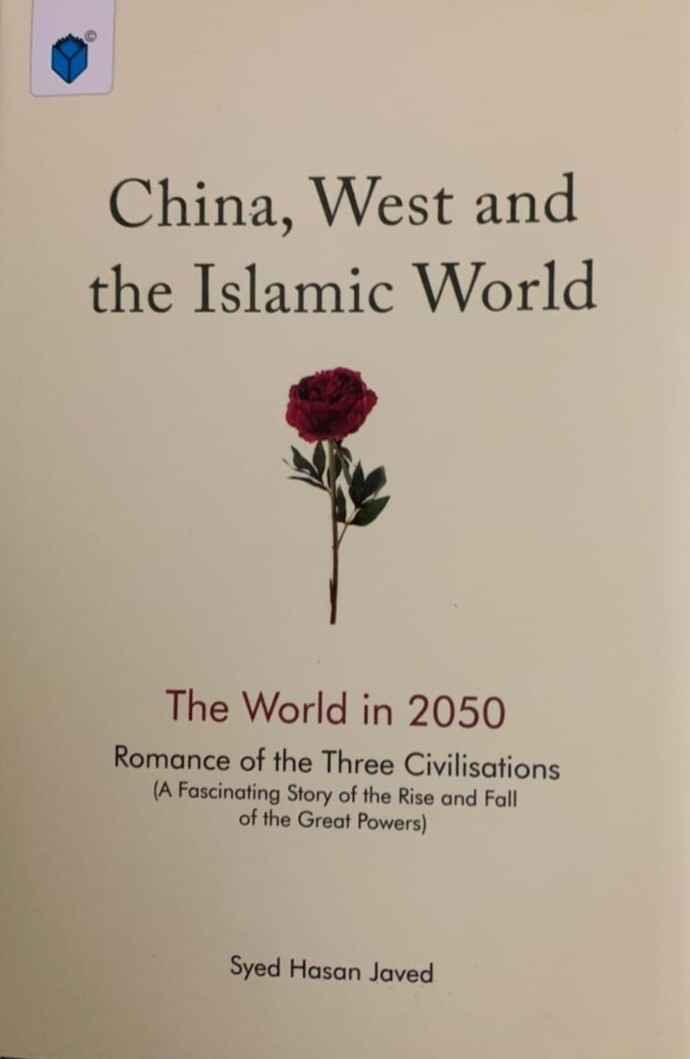
In the book, Javed is answering questions including why and how the contemporary world came to this stage, particularly the global morality and financial crisis. He has tried to find answer to current paradoxes in the global mainstream thought in strategy, diplomacy and economy, to promote balance and harmony among the world's three polar civilizations: China, West and the Islamic world.
He prefers to call it the "Romance of the Three Civilizations." Meanwhile, Javed tells the story of China's renaissance, rise and revival from his perspective.
Li Xiguang, a professor at Tsinghua University, finds that apart from abundant natural resources and a large youth population, Muslim countries account for 23 percent of the world's population and 21.7 percent of the world's land area, while non-oil producing countries account for only 4 percent of the world's GDP.
When people think and study about the Muslim world, Western colonialism still plays an agenda shaping the world in producing knowledge about countries along the Belt and Road, Javed writes on the book cover.
For a long time, it has been difficult for Western politicians and academia to confront their colonial history in Eastern countries.
The global community has paid a heavy price for such self-centric, egoist, narrow and superficial thoughts. These have merely led to relentless pursuit of hegemonies, geopolitical domination and strategic rivalry, which are totally uncalled for, Javed told the Global Times.
For this reason, under the initiative of a "community of shared future" and the Belt and Road, all Chinese and Islamic intellectuals need to have a better understanding of the cotemporary world and its history.
At a time of great global ferment and turmoil, China-proposed Belt and Road Initiative (BRI) for building a community of shared destiny, provides a rare hope for optimism. It is good omen for the humanity's future.
"No wonder, 129 states have already signed up to the projects and plans under this mega initiative. The BRI is the next phase of globalization, as it addresses the gaps in development by promoting connectivity, prosperity and community. Pakistan is fortunate to be a major beneficiary of BRI under the China Pakistan Economic Corridor," Javed noted.
In his book, Javed is shaping up his own version of China story. As the author of seven books on China, he has interpreted China's reform and opening-up from his own perspective.
"In my view, the Islamic and the developing world can learn a lot from China's rise, particularly its comprehensive policy of reform, which enabled it to achieve extraordinary and amazing successes in scientific, technology, economic and social fields from a position of weakness," he said.
China converted its weaknesses into opportunities for itself and the world. It is now contributing nearly one-third of global growth. China achieved in four decades (1980 -2020), what took the Western world 400 years to achieve. China did it with the help of its "'soft power" while the Western world had done it with brutal colonization and exploitation, he said.
Both Javed and Li find that the BRI is the right approach to reach the shared future.
China-proposed BRI will be a panacea to change the backwardness of Islamic countries.
Western politicians and academics have long struggled to come to terms with their colonial past in Eastern countries. Therefore, under the Community of Common Destiny and the BRI, intellectuals in both China and Muslim countries need to have a better understanding of the contemporary world and history, Li said in in a review of the book.
Book cover of China, West and the Islamic World Photo: Courtesy of Syed Hasan Javed
In the words of the author Syed Hasan Javed, director of the Chinese Studies Center of Excellence at the National University of Science and Technology in Islamabad, the book is an effort to bridge the various "disconnects and gaps," which aims to contribute to the global malaise and trauma.In the book, Javed is answering questions including why and how the contemporary world came to this stage, particularly the global morality and financial crisis. He has tried to find answer to current paradoxes in the global mainstream thought in strategy, diplomacy and economy, to promote balance and harmony among the world's three polar civilizations: China, West and the Islamic world.
He prefers to call it the "Romance of the Three Civilizations." Meanwhile, Javed tells the story of China's renaissance, rise and revival from his perspective.
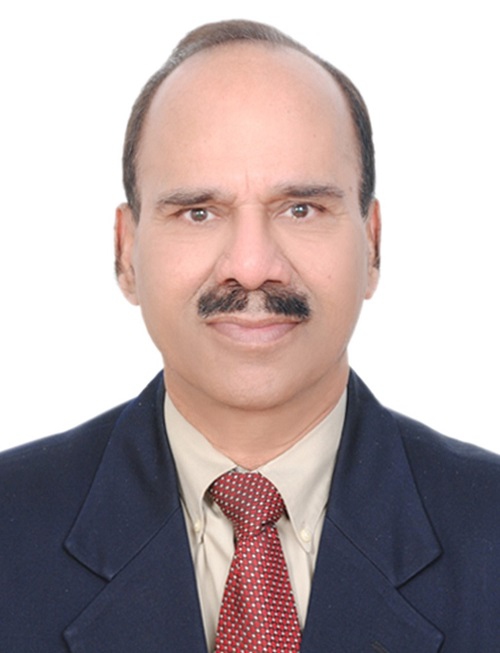
Syed Hasan Javed, director of the Chinese Studies Center of Excellence at the National University of Science and Technology in Islamabad Photo: Courtesy of Syed Hasan Javed
China, West and the Islamic World is the first book by an Islamic scholar that discusses how the three civilizations can live in peace and harmony in the future, offering an outlook on how the world might be like in 2050.Li Xiguang, a professor at Tsinghua University, finds that apart from abundant natural resources and a large youth population, Muslim countries account for 23 percent of the world's population and 21.7 percent of the world's land area, while non-oil producing countries account for only 4 percent of the world's GDP.
When people think and study about the Muslim world, Western colonialism still plays an agenda shaping the world in producing knowledge about countries along the Belt and Road, Javed writes on the book cover.
For a long time, it has been difficult for Western politicians and academia to confront their colonial history in Eastern countries.
The global community has paid a heavy price for such self-centric, egoist, narrow and superficial thoughts. These have merely led to relentless pursuit of hegemonies, geopolitical domination and strategic rivalry, which are totally uncalled for, Javed told the Global Times.
For this reason, under the initiative of a "community of shared future" and the Belt and Road, all Chinese and Islamic intellectuals need to have a better understanding of the cotemporary world and its history.
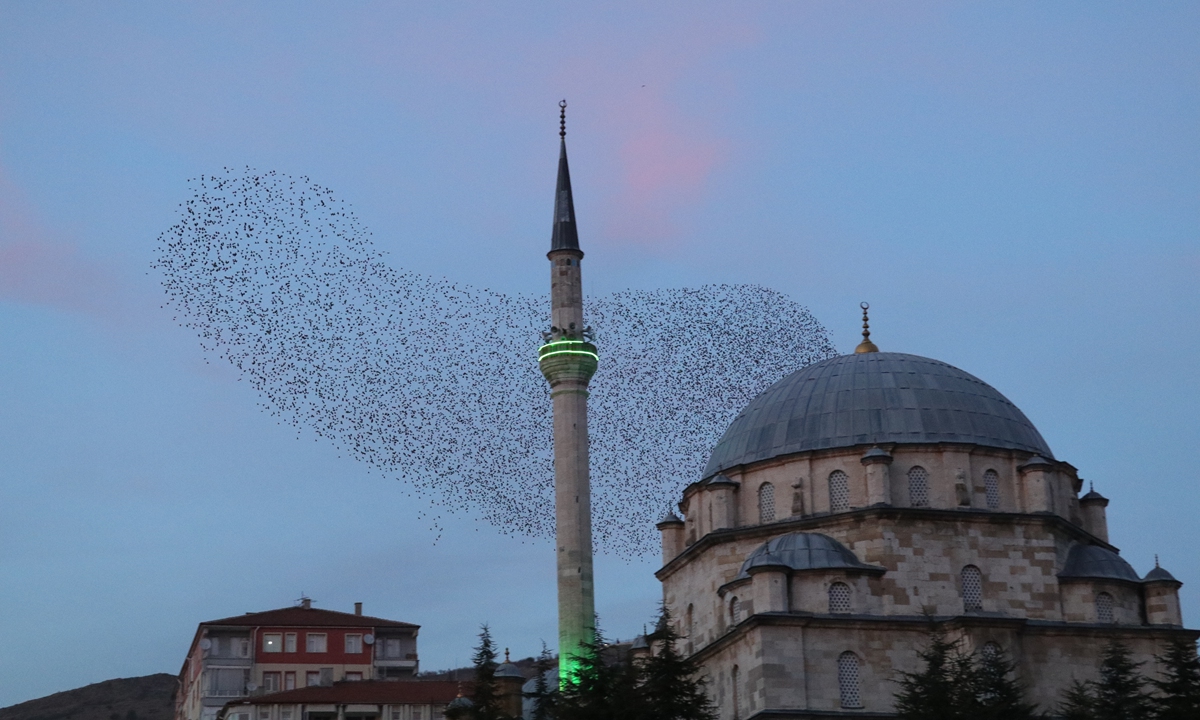
A view of a murmuration of starlings over a mosque in Yozgat, Turkey on February 11. Photo: VCG
"Our planet does not have to become a lonely place, even when its population is approaching eight billion souls. We have to teach the children to celebrate diversity, multiculturalism and globalization," he said in an email interview.At a time of great global ferment and turmoil, China-proposed Belt and Road Initiative (BRI) for building a community of shared destiny, provides a rare hope for optimism. It is good omen for the humanity's future.
"No wonder, 129 states have already signed up to the projects and plans under this mega initiative. The BRI is the next phase of globalization, as it addresses the gaps in development by promoting connectivity, prosperity and community. Pakistan is fortunate to be a major beneficiary of BRI under the China Pakistan Economic Corridor," Javed noted.
In his book, Javed is shaping up his own version of China story. As the author of seven books on China, he has interpreted China's reform and opening-up from his own perspective.
"In my view, the Islamic and the developing world can learn a lot from China's rise, particularly its comprehensive policy of reform, which enabled it to achieve extraordinary and amazing successes in scientific, technology, economic and social fields from a position of weakness," he said.
China converted its weaknesses into opportunities for itself and the world. It is now contributing nearly one-third of global growth. China achieved in four decades (1980 -2020), what took the Western world 400 years to achieve. China did it with the help of its "'soft power" while the Western world had done it with brutal colonization and exploitation, he said.
Both Javed and Li find that the BRI is the right approach to reach the shared future.
China-proposed BRI will be a panacea to change the backwardness of Islamic countries.
Western politicians and academics have long struggled to come to terms with their colonial past in Eastern countries. Therefore, under the Community of Common Destiny and the BRI, intellectuals in both China and Muslim countries need to have a better understanding of the contemporary world and history, Li said in in a review of the book.
