Following Black Myth: Wukong’s success, Chinese game studio brings wuxia dreams to life with Phantom Blade Zero
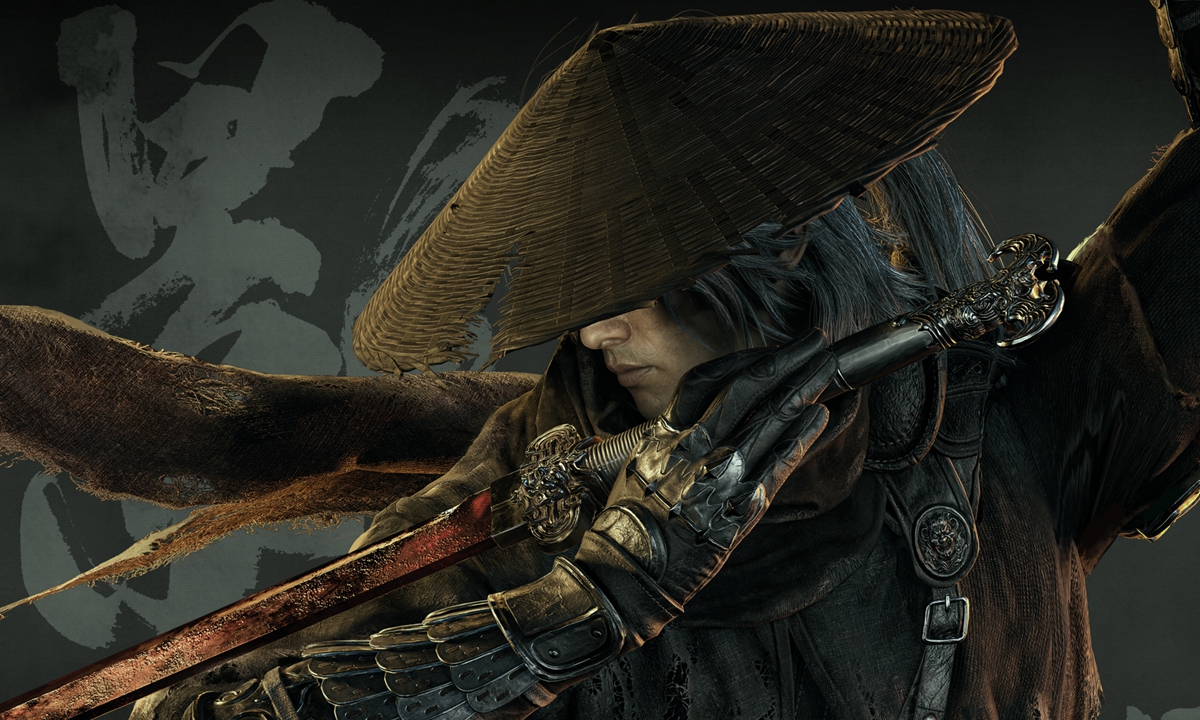
Promotional material for Phantom Blade Zero Photo: Courtesy of S-GAME
When this year's Game Awards announced the six contenders for Game of the Year, the list included well-known names from the US and Japanese producers: Grand Theft Auto VI, Resident Evil Requiem and The Legend of Zelda: Ocarina of Time.
Sharing the list was a martial arts game from Beijing. Long before Phantom Blade Zero earned its nomination, players had given their own verdict: they bought more than 4 million copies in the first 72 hours after its release, according to its developer, S-GAME.
Sunday marks one month since Phantom Blade Zero went on sale. Liang Qiwei, S-GAME's founder, CEO and the game's producer, told the Global Times that his team had set no sales target.
A game that takes years to develop has to earn enough to keep the team working, Liang said. The question is whether players at home and abroad would want to spend time in its "kung fu punk" world.
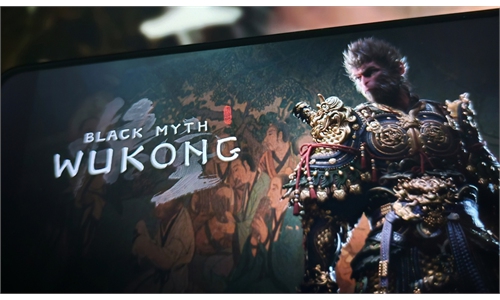
Black Myth: Wukong ignited the global market in 2024 with a story rooted in Chinese mythology and the classic novel Journey to the West. Two years later, Phantom Blade Zero turns to wuxia, the world of martial heroes familiar to generations of Chinese players.
"Black Myth: Wukong really did open a door for Chinese games," Liang said. Its success prompted overseas platforms, media outlets and players to seek out the next release from China, he said.
Black Myth: Wukong has helped change how investors and developers view the market potential of Chinese premium single-player games, and the success of Phantom Blade Zero has shown the industry that Chinese studios can repeat that success with a different kind of story, Beijing-based technology analyst Liu Dingding told the Global Times on Sunday. For developers and investors, it strengthens the case for backing more original Chinese games for the global market, he said.
Industry behind action
Phantom Blade Zero earned five nominations at this year's Game Awards, with nods for Game of the Year, Best Game Direction, Best Art Direction, Best Score and Music, and Best Action Game reflecting the breadth of the team's work, from the look and sound of its martial arts world to the way players feel in their hands. Before the nominations were announced, the game stood second in the Ultimate Game of the Year vote at the Golden Joystick Awards.
"A project that takes years to develop needs to earn enough for the team to keep creating," Liang said. "But for us, strong sales are the result of making a good game. They weren't our goal when we set out."
The special thanks section in Phantom Blade Zero's credits name Game Science founder Feng Ji, whose studio made Wukong, alongside miHoYo co-founder Liu Wei and Kuro Games CEO Li Songlun. Their studios took different routes to overseas players.
MiHoYo found a global audience with Genshin Impact and Honkai: Star Rail, while Kuro Games built up its experience in action games with Punishing: Gray Raven and Wuthering Waves.
For S-GAME, one of the biggest commitments of time and labor was making a martial artist's movements feel right in a player's hands, Liang said.
Recording a move was just the start. Animators corrected it frame by frame, and developers tested when a strike should register as a hit. Actor and martial artist Donnie Yen helped shape the fighting style and played Mo Yuan through facial and full-body motion capture. Singers Zhang Liangying and Sha Baoliang recorded the theme song Heart Lake and ending song My Heart Beats True, respectively.
The team scanned historic buildings and traditional craft objects to recreate them in the game, and tested performance across devices. Liang said that Chinese technology and production helped control costs.
Liu recalled visiting a Chinese motion-capture company before the game's release. In its studio, performers' movements could be recorded using markers attached to their bodies or tracked by cameras. Liu expects Chinese studios to release new AAA games more frequently.
Games' global reach
China remains the game's strongest market, Liang said, but the interest from abroad exceeded the team's expectations. Brazil ranked second among overseas markets by its share of wish-lists. Players in Turkey and the Middle East wrote to ask for versions in their own languages.
Players also found different ways into the same story. At demos and in online discussions, some European and US game fans broke down individual moves to work out where the force behind a strike came from, Liang said. In Latin America and the Middle East, players unfamiliar with wuxia connected with the characters made about whom to protect and which principles to uphold.
China's gaming market generated 92.52 billion yuan ($13.88 billion) in sales revenue in the third quarter of 2026, up 5.11 percent year on year. Within that market, sales of PC games rose 1.26 percent to 20.55 billion yuan. Overseas sales of Chinese-developed games reached $5.77 billion, up 15.58 percent year on year, according to the Game Publishing Committee of the China Audio-video and Digital Publishing Association.
Observers noted that for a studio selling a story-driven game, one decision after launch is where to invest to reach the next group of buyers. Liang said that localization involves adapting the storytelling, finding the right voices for the characters and listening to players. Fixing problems and updating content decide whether early buyers will recommend a game to someone else.
According to Liu, Chinese studios should "tell Chinese stories in a language the world understands." In Phantom Blade Zero, the way a fight is lit and the way a scene unfolds give overseas players familiar cues as they enter an unfamiliar world. Studios can use platforms such as TikTok to bring their work to audiences abroad, he said.
S-GAME has released merchandise for collectors and sees scope for partnerships in culture and tourism, Liang said. For now, the studio's priority is improving the game for those already playing it.
"Overseas players are drawn in by the fighting and then become interested in wuxia culture," Liang said. "That interest itself is the strongest foundation for a market."
RELATED ARTICLES