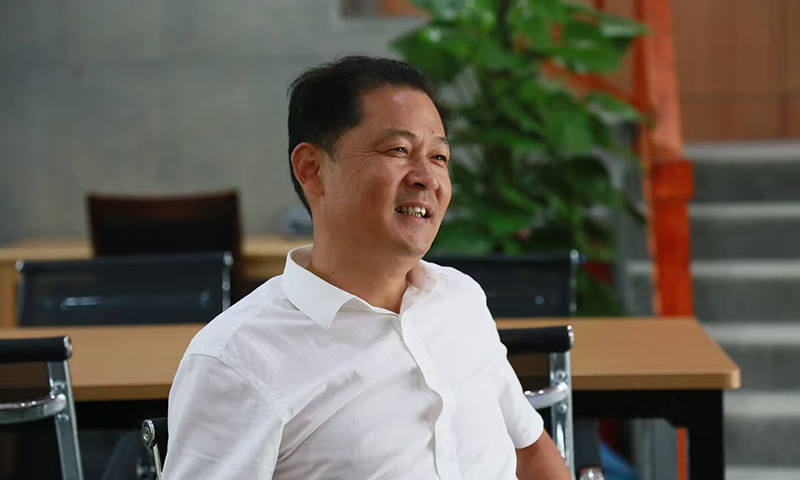
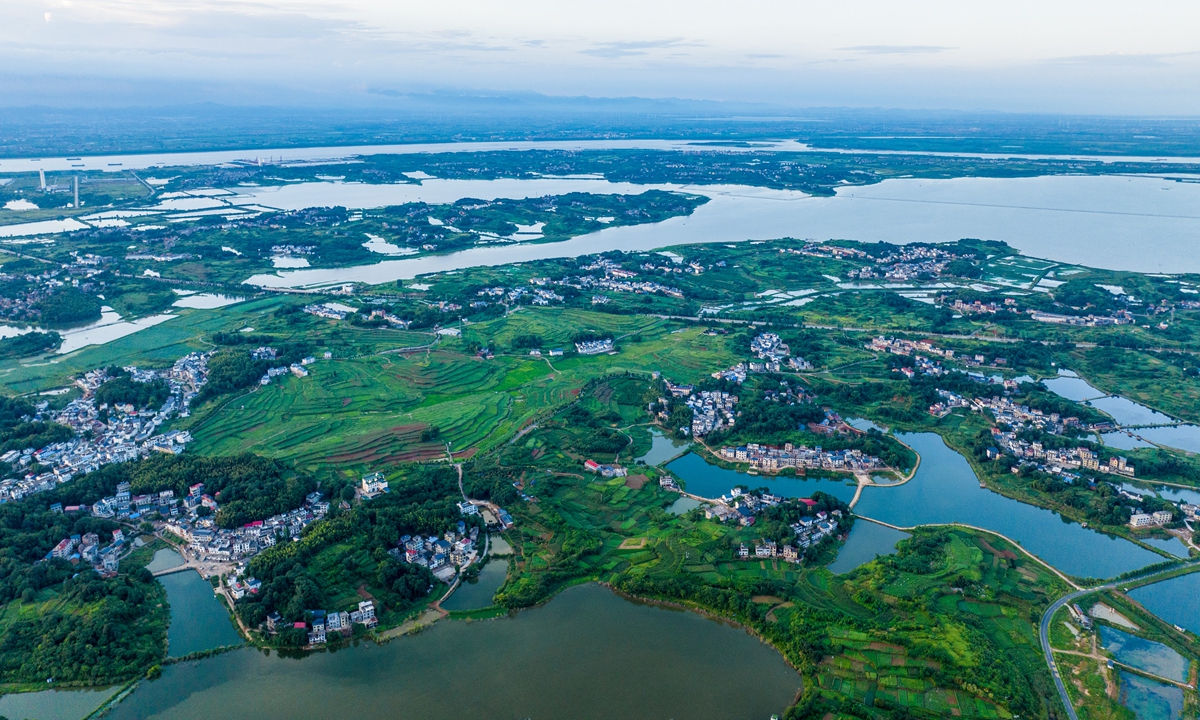
This is the 9th installment in the "Practitioner's insights" series. We trace back to Yucun village in Anji, East China's Zhejiang Province - the birthplace of the concept of "lucid waters and lush mountains are invaluable assets," and speak with a former village official who witnessed the proposal and implementation of this vision, as well as a young entrepreneur who has chosen to settle and build her careers in Anji. Over the past two decades, Yucun has developed green economy driving coordinated revitalization in surrounding areas. This journey vividly demonstrates how the "two mountains" concept took root in a small mountain village and evolved into tangible productive forces across industries, delivering visible benefits to the people.
In the 10th article of the "Readers' Reflections" column, Global Times (GT) reporter Ma Jingjing talked to Helge Muenkel (Muenkel), Chief Sustainability Officer of Singapore-based DBS Bank, who profoundly perceived China's rapid strides in ecological development and green technology and the global value of the concept that "lucid waters and lush mountains are invaluable assets." According to Muenkel, China's green technology innovation and industrial development experience have provided strong support for the global energy green transition, while providing new opportunities for global partners and foreign enterprises with the country's high-quality development.
In the 10th article of the "Translators' Voices" column, Global Times (GT) reporter Wang Wenwen interviewed Dr. Khosraw Ubaidy (Ubaidy), who was a member of the editorial committee of translators of the Dari edition of the book series Xi Jinping: The Governance of China.
Chinese President Xi Jinping, also general secretary of the Communist Party of China Central Committee and chairman of the Central Military Commission, on March 5 took part in a deliberation with his fellow deputies from the delegation of Jiangsu Province at the third session of the 14th National People's Congress (NPC), China's national legislature, the Xinhua News Agency reported.
Since the 18th National Congress of the Communist Party of China, Xi Jinping, general secretary of the Communist Party of China Central Committee, has used the metaphor of "calculating accounts" on many occasions to expound key issues. Whether they are accounts of the long-term, overall and comprehensive nature, each account reflects the Party's commitment to building itself for the public good and exercising power for the people. How are these "accounts," which he has consistently emphasized, calculated? The Global Times launches a series of stories to find the answer from the proposals and motions as well as the key words of the annual national two sessions. This is the first installment.
Luis Rene Fernandez Tabio, senior professor and researcher at the University of Havana, shared his insights with GT on the achievements of China's green transformation.
Walking across the sand dunes, Lu Qi steps on sand divided into square blocks by straw.
In this installment, we delve into how China's practices and concepts, inspired by Xi Jinping's Thought on Ecological Civilization, were shared and highlighted at the just concluded COP29, in Baku, Azerbaijan.
Recently, a forum exploring ecological industries and new quality productive forces was held over the weekend in Hangzhou, East China's Zhejiang Province, aiming to address issues that impact the scope and path of ecological civilization construction and high-quality development. At the event, the Global Times engaged with policymakers, industry leaders, and scholars to understand the current progress and future directions of China's ecological industry.
The situation in Beijing serves as a microcosm of why China is considered a model for the world. This is not only due to its ambitious climate goals and pioneering green sector but also because of the significant efforts and changes the country has made.